The Decluttering Myth: Why Empty Space Is Not the Only Measure
The decluttering myth says less is always better. Use a purpose-based room test to keep what serves daily life and clear what gets in its way.
Does a tidy room have to look nearly empty to count as decluttered? The decluttering myth says less is always better, but a room earns its space by helping you live, work and rest—not by displaying bare shelves. Decide what stays by asking what each item makes possible and whether it has a sensible place.
Room for a purpose
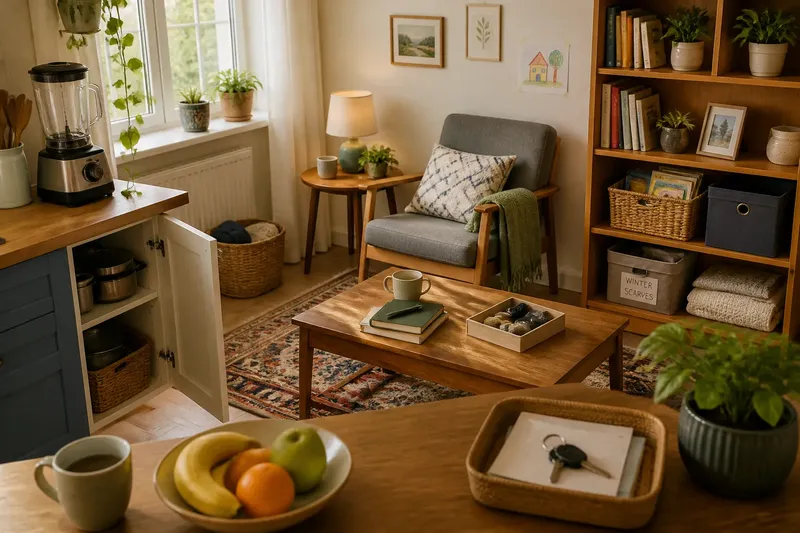
Empty space can be useful: a clear kitchen worktop gives you room to prepare food, and an uncluttered hallway lets people pass without sidestepping bags. But emptiness is not a goal in itself. A cupboard with the right pan, a lamp beside a reading chair or a basket of children’s books may make a room work better, even if none would appear in a minimalist photograph.
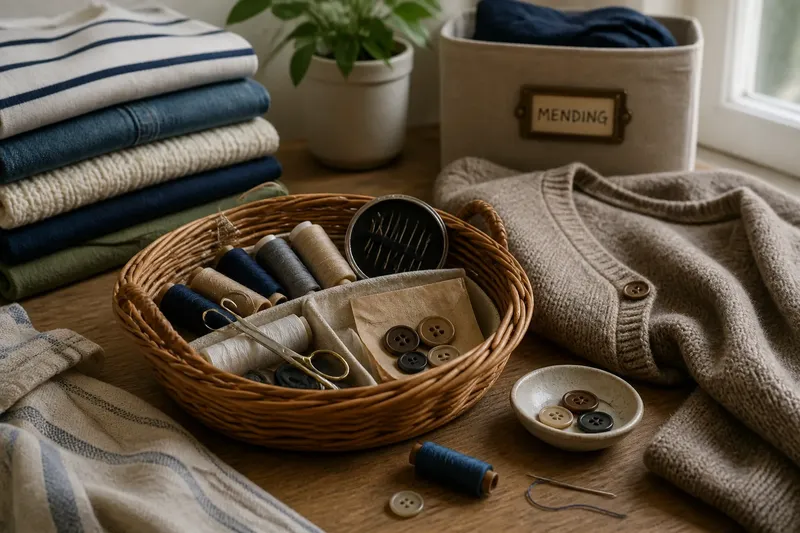
Try separating three ideas that often get bundled together: owning an item, keeping it accessible and leaving it on display. A spare duvet can belong in a labelled cupboard rather than on the bed. A frequently used sewing kit may deserve a reachable drawer. A treasured object can be kept without occupying the most convenient surface.
For each item you are unsure about, ask: What job does it do here? How often does that job arise? Is this the best place for it? The answers point towards a decision without turning the number of possessions into a score.
Choose by situation
If daily tasks feel awkward
Prioritise access over visual sparseness. Keep the things you reach for during ordinary routines near the place you use them: cooking utensils near the hob, keys by the exit, or a notebook beside your desk. Move occasional-use items to a less prominent shelf, and remove objects that repeatedly obstruct the task.
Imagine your kitchen counter is crowded by a blender used for morning smoothies, a fruit bowl and unopened post. You could move the blender to a nearby cupboard if lifting it is easy, put the post in a designated tray elsewhere, and leave the fruit bowl where it supports a daily habit. The expected result is a usable preparation area without treating every visible object as a failure.
If you use things in cycles
Keep seasonal or occasional items if their use is predictable and storage is available. Put a winter scarf, picnic blanket or spare set of bedding somewhere clearly defined, then make the location easy to remember. If an item has no likely use, no suitable storage place and no particular importance, it may be taking room from something more useful.
Do not confuse “not used every day” with “pointless”. A torch kept for power cuts or a folding chair brought out for visitors can justify its place because it serves a specific need when that need arises. The decision is whether the item is reliable, findable and proportionate to the space it occupies.
If belongings carry meaning
Allow some room for memory. You might keep a small box of letters, a child’s drawing or a family recipe card because the item connects you to someone or something you value. Choose a container or shelf that respects the collection, and decide what belongs in it rather than demanding that every keepsake earn its place through frequent use.
If the collection grows, select the pieces that matter most to you and consider photographing bulky items you do not need to retain. That is an option, not an obligation: a digital image may not replace the feel or significance of the original. Keep the decision personal rather than treating sentimental belongings as clutter by default.
If storage is genuinely tight
Focus on fit and frequency. Give the most convenient storage to things used often, and reserve less accessible spots for items used occasionally. If a cupboard is full, check for duplicates, broken objects or supplies that have lost their purpose before deciding that every useful item must go.
Where several items serve the same job, keep the one that suits your needs and is in sound condition, unless the alternatives have distinct uses. A spare can be sensible when it prevents a real disruption; a row of near-identical objects with no separate role may simply make the useful one harder to reach.
A purpose-based test
Use this short check when a decision feels stuck:
- Use: What task, comfort or occasion does this support?
- Place: Where should it live so it is easy to find without blocking another activity?
- Frequency: Is it used often, seasonally, or only for a specific contingency?
- Condition: Does it still work, fit or serve the purpose you have in mind?
- Overlap: Does another item do the same job well enough?
- Cost of keeping: Does it consume space, attention or upkeep that matters more elsewhere?
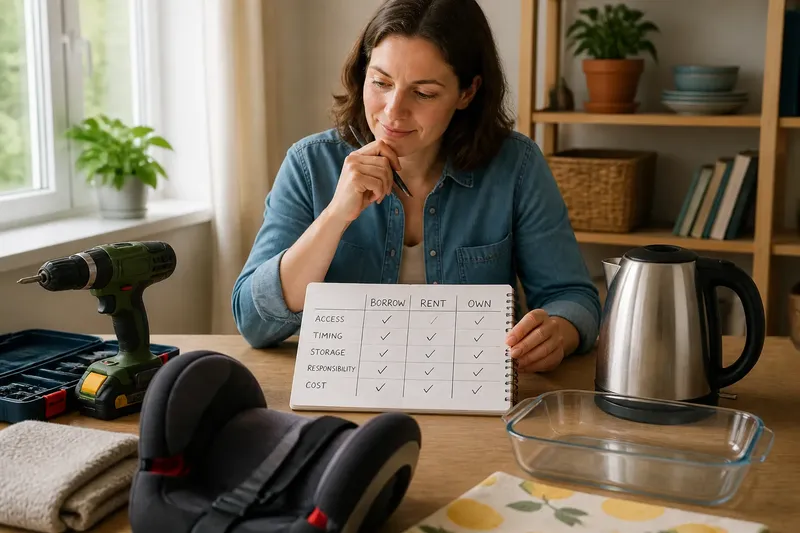
Use the answers together. Something can be rarely used but valuable, or regularly used but badly placed. The point is not to produce a perfect score; it is to make the trade-off visible. If you are uncertain, set the item aside in a dated “decide later” box and revisit it when you next need that category of belongings. If you look for the item and cannot find it, that tells you something; if you forget it entirely, that tells you something else.
Questions about keeping things?
How do I know if an item deserves space?
Look for a clear role: it helps with a task, meets a real occasional need, or matters to you for a reason you can name. Then check whether its storage place makes sense and whether keeping it crowds out something more useful.
Should I get rid of duplicates?
Compare their actual jobs, condition and convenience rather than counting them. Keep duplicates when separate locations or uses make them helpful; release extras that add no useful choice and make storage harder.
What if I feel guilty letting something go?
Guilt does not tell you whether an object is useful or meaningful now. If it belongs to someone else, ask them before disposing of it; otherwise, choose a respectful next step, such as offering it to someone who wants it or recycling it where accepted.
How much empty space should a room have?
Enough for the room’s activities, movement and the storage those activities need. There is no universal visual target: a clear route through a busy family room may matter more than an untouched sideboard.
What is not worth effort
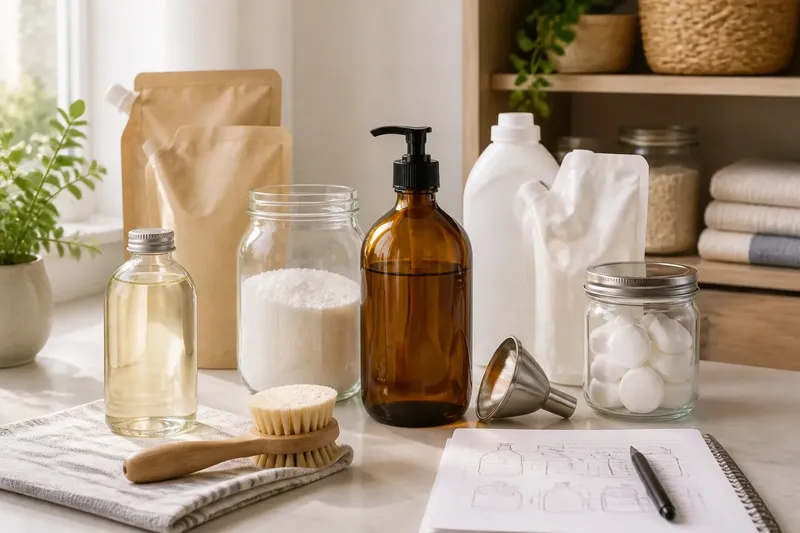
Do not buy matching boxes, decant every supply or keep rearranging objects to imitate a staged room before you know what needs to stay. Containers can make useful things easier to manage, but they cannot decide what belongs. Start with the role and location of the belongings you already have; add storage only if it solves a specific problem.
The decluttering myth loses its grip when you judge a room by what it lets you do. A clear surface is valuable when you use it; a shelf of well-kept tools is valuable when those tools support your work. Keep the space that serves a purpose, and let the rest of the room reflect how you actually live.